Automation20:07
AI in manufacturing does not take 12 weeks. Plan 4–9 months for the first use case
Discover the realistic timeline for AI implementation in manufacturing: 4–9 months for the first use case, initial savings after 2–3 months of stable operation, and ROI within 6–12 months.
Listen to the article summary
Synthetic voice.We share what we have tested firsthand in our implementations: free of charge and without assuming your situation is identical. A common claim circulates at trade fairs and keynote presentations: "AI on the production line takes 12 weeks". It sounds compelling because it cites concrete data: 60 hours to stand up an AI factory, 6 weeks for heat-treatment models, under 12 weeks to launch pilot tests in a Siemens plant. There is a grain of truth here: in a well-prepared environment, with ready-made interfaces and a single, narrow process, you really can launch in a quarter. The problem begins when this slide meets an actual production floor, legacy machinery, and data logged in spreadsheets.
The strongest counterargument
Vendor numbers are not fabricated out of thin air. Epiroc launched its AI environment on Azure in 60 hours, and models for over 3,500 steel grades were built in 6 weeks; Microsoft detailed the project in its case study. Siemens Rastatt took less than 12 weeks from initial talks to starting tests across four AOI lines, as documented in a Siemens case study. EGA set up an edge platform in 3 months, cutting computer vision analytics costs by 86%. These are hard numbers, and they define the ceiling where infrastructure is new, data already flows, and the vendor implements its own tool on its own line.
The premise holds under one condition: we are talking about a narrow, repeatable process, not an entire plant. Behind these stories are usually new lines, clean data streams, and teams that have already undergone digital transformation. It is not deceptive: it is best practice in a select segment, not a universal standard.
What this argument overlooks
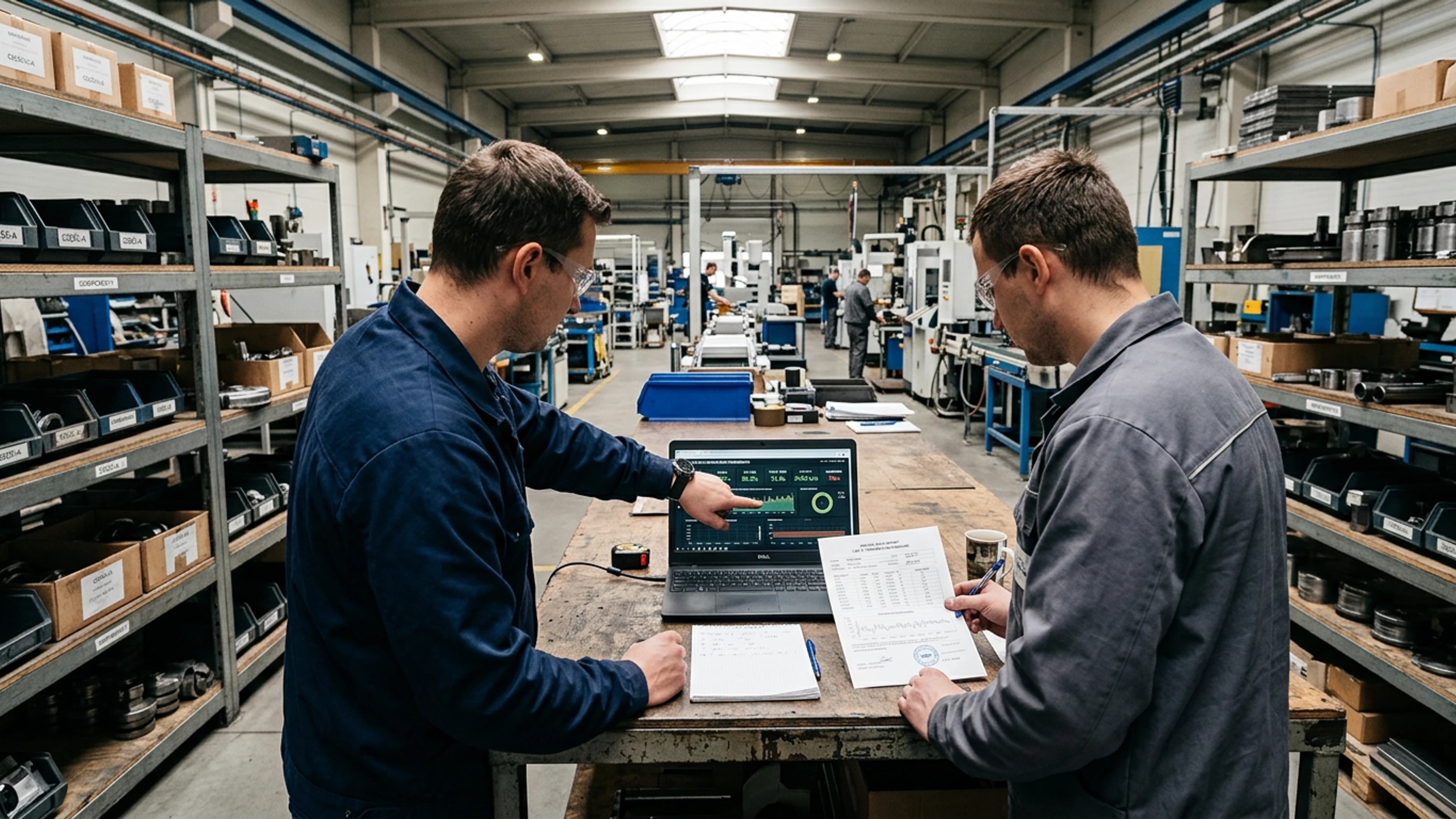
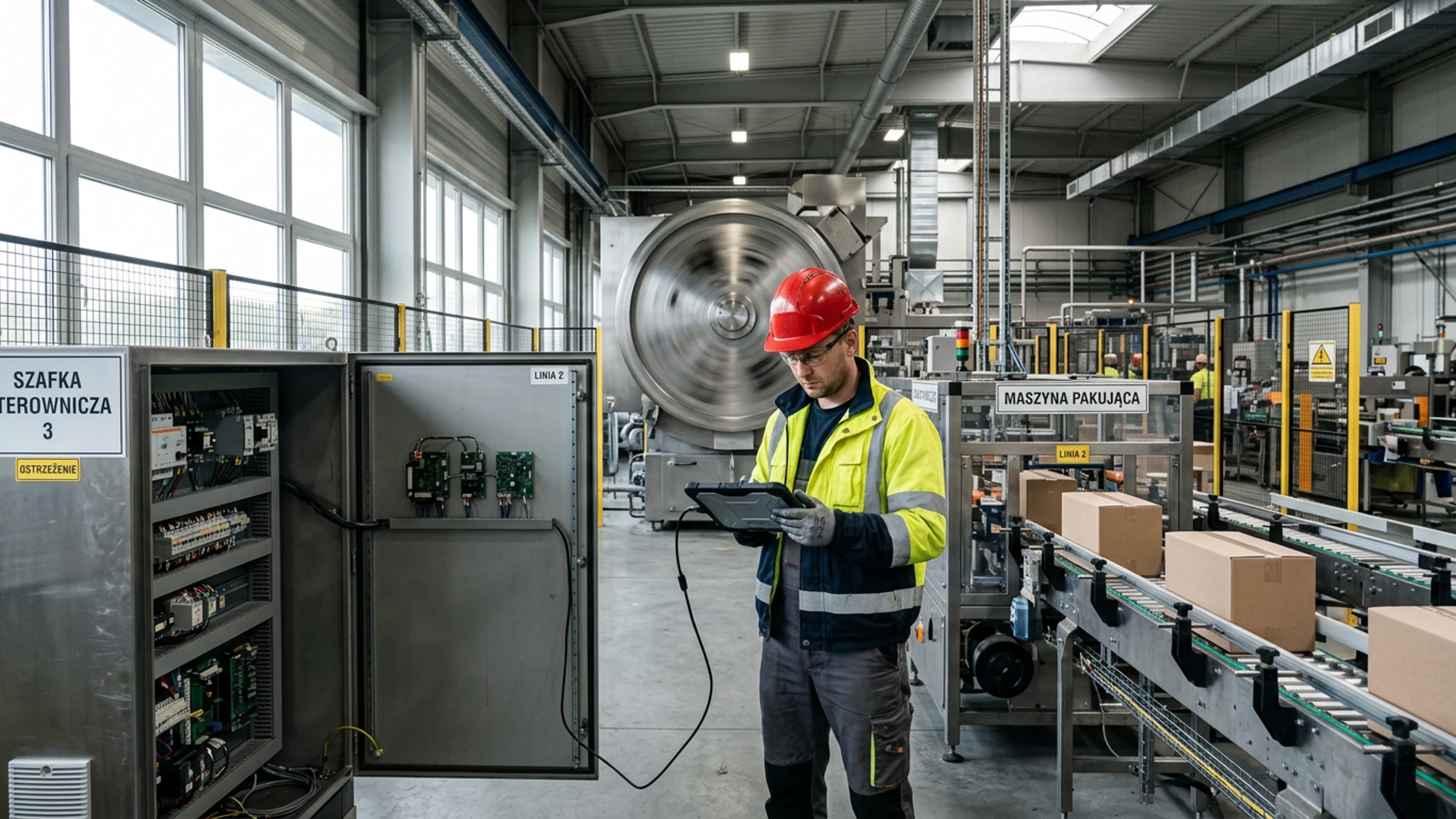
These numbers do not include three factors that determine the schedule in Poland. First, data quality. When sensors lack consistent identifiers and measurements are logged manually each shift, the audit alone can add 2–6 weeks. Second, OT integration. Legacy lines without APIs or communication standards require overlays, gateways, or additional sensors: that means 4–8 weeks missing from the slide. Third, people and procedures. Trade unions, monitoring consents, GDPR for camera data, machinery safety requirements with UDT acceptance, and shift training add another 2–6 weeks. When a system might have high-risk characteristics under the AI Act, compliance documentation enters the schedule, not just the model itself.
Our position
We plan 4–9 months for the first use case, not 12 weeks. Our timeline looks like this: audit and scope 2–4 weeks, process and vendor selection 2–3, data integration with MES/SCADA/ERP 4–8, model build and training 3–6, on-line validation 2–4, pilot 4–6, scaling and training 4–12. Several of these stages run in parallel: we conduct training during integration and prepare acceptance procedures during validation. We do not promise initial measurable savings at the project kickoff: they typically appear after 2–3 months of stable operation, with full payback after 6–12 months. The budget for a first implementation usually falls within 200,000–800,000 PLN net, with annual maintenance at 10–15% of that value.
Co to zmienia w terminarzu na ten kwartał
If you need to make a decision on Monday morning, do not look for a 12-week promise. Ask for a stage breakdown with dates, not an ROI slide. Ask how long your data audit will take, where the APIs are, and who will sign off on on-line acceptance tests. Collect historical data and sensor lists alongside the audit, and run initial shift supervisor training during integration. We would only reconsider under one condition: if the audit confirmed clean data, ready APIs, and a single narrow process, then 12 weeks would be realistic. In all other cases, 4–9 months is not a delay: it is an honest plan.
Source materials
Sources consulted during research. The text above is our own; these third parties are not responsible for its content and have not authorised it.
- A Leader's Guide to Industrial AI in Action
- Epiroc advances manufacturing innovation with Azure Machine Learning and Azure Data Factory | Microsoft Customer Stories
- Emirates Global Aluminium cuts cost of manufacturing AI by 86 percent with the introduction of Azure Stack HCI | Microsoft Customer Stories
- Artificial intelligence in process manufacturing. Preparing for an AI-driven future. January 2025
- Microsoft Copilot Studio
- Message in a bottle: Piramal Glass brings real-time manufacturing insights with IoT and cloud - Microsoft Stories India