Skip to content

HEXART Founder

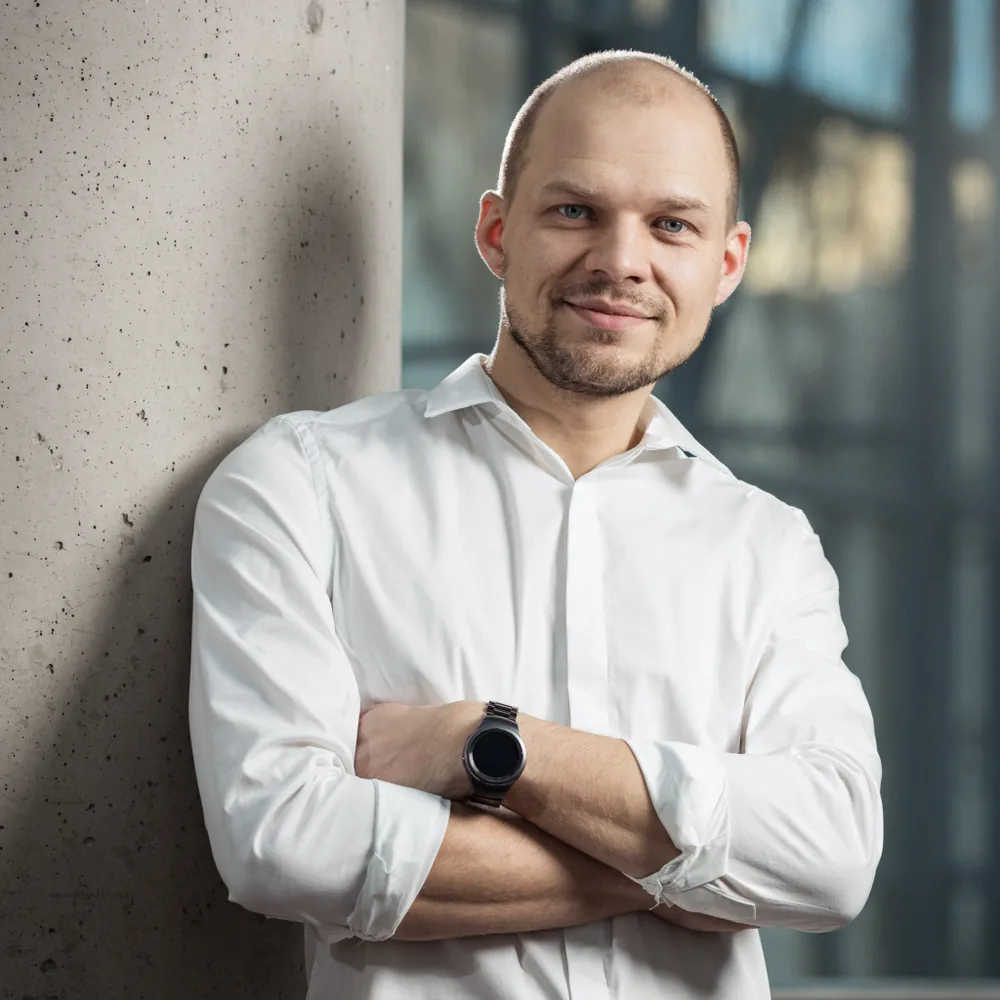
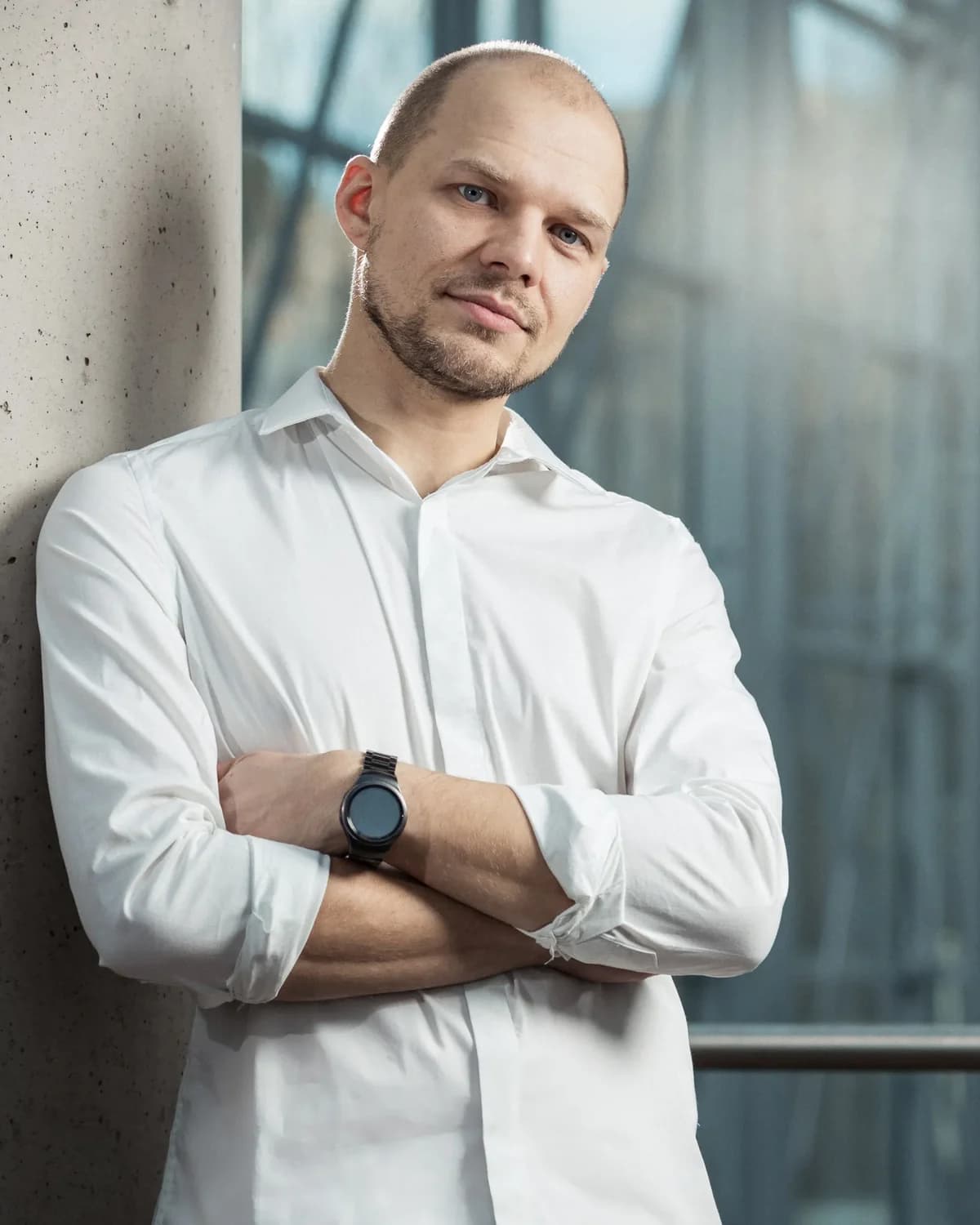
Paul Lazniak

Paweł Łaźniak · PabloGFX

Founder and CEO of HEXART Sp. z o.o.

From color grading in Polish cinema, through face mapping seen by 400 million Chinese television viewers, to AI tools used today by the open-source community.

Twenty years in one profession sounds like a cliché until you break it down year by year. Below it is laid out year by year, with the role, project name, and link to the source material. Every piece of material can be viewed or verified in an independent source, from a KRS company registry extract to a code repository.

This journey shares one common trait: each stage began with technology that no one in Poland was using commercially yet. First came digital post-production, then VR, then generative video. That is why at HEXART, we run AI implementations the way a film production is run: with a deadline, a budget, and full accountability for the end result.

Paul Lazniak, founder of HEXART
Gdynia, Aleja Zwycięstwa 96/98. The same address since 2006.

Timeline

From the first commercials to AI systems

Each entry includes the year, specific role, and a link to material that can be viewed or verified at the source. The filter narrows the timeline to a single path: film, XR, AI, or business.

2003–2012

Film craft

Editing, color, camera. The stage where image quality depends on process discipline, not gear. Broadcast deadlines are never negotiable.

  1. 2003
  2. 2006June 19

    First own production company

    Open-Productions Łaźniak sp.j. · partner

    Registration of a family general partnership in Gdynia (KRS 0000258921). Four months later, the company moves to Aleja Zwycięstwa 96/98. Ten years later, VR Visio, Ignibit, and HEXART launch at the same address.

    registry number
    KRS 0000258921

    The company was dissolved by a partners' resolution on 31 December 2009 and removed from the register in February 2010. This is the only stage of this journey that ended with the closure of an entity, and the first one brought up directly in discussions about project risk.

    SourcesFull KRS extract

  3. 2008

    First feature film and continuous work for TV stations

    color grading, editing, camera operator

    Color grading for the film "Ruby Wedding", the earliest entry in his filmography. In parallel, shooting and editing materials broadcast on TVN, TVN24, TVN Turbo, TV4, and Polsat Sport.

    The year 2008 also marked the start of ongoing work on TV commercials. The studio showreel opens with this exact date.

    SourcesFilmPolski.pl · Radio Gdańsk

  4. 2009

    "Yoko Ono's Cups": color grading

    color grading

    A short film and another entry in the filmography. Working with color as a distinct discipline, not just an add-on to editing. This later translates into visual consistency across model-generated shots.

    SourcesFilmPolski.pl

  5. 2012March

    Film on the first Polish supercar

    Arrinera · directing and production

    Brand film for Arrinera shot among others at the pre-war airfield in Ułęż. This project was featured in the first press coverage of his work outside the industry media.

    This was the moment the Gdynia-based studio transitioned from being a post-production subcontractor to leading its own productions for premium brands.

    Sourcestrojmiasto.pl, 2012

  6. 2012until 2014

    "Opowieści kota Śpiocha": animation, 23 episodes

    animation

    Animated series produced over two years. The scale of twenty-three episodes demands what is now called a pipeline: a repeatable process instead of isolated successes.

    episodes
    23

    SourcesFilmPolski.pl

2013–2020

Building the Polish VR scene

Co-founder of VR Visio Group, later transformed into Ignibit S.A. A period when the Gdynia studio delivers projects for Chinese television and global automotive brands.

  1. 2013

    First VR project: water park interior on Oculus headsets

    collaboration with Damian Karczewski

    Collaboration on films and animations, during which both encounter an early version of the Oculus headset. The first project is a visualization of the water park interior in Reda.

    Back then, VR in Poland is an expo novelty. The team focuses on content production, not hardware. This decision allows the company to weather subsequent waves of hype and disappointment with headsets.

    A year later, Trojmiasto.pl writes about them as co-founders of the VR One startup. They build a twelve-camera rig for stereoscopic 360-degree films and develop the AeroVR project: a paragliding flight recreated in a VR headset. That same year, the VR One project, formally run as Damian Karczewski's sole proprietorship, wins the twelfth edition of the Gdyński Biznesplan competition with a 20,000 PLN prize.

    SourcesPrestiż Trójmiasto 6/81 · trojmiasto.pl, 20.06.2014

  2. 2016April 21

    Registration of VR Visio Group

    VR Visio Group Sp. z o.o., Gdynia · board member, art director

    Company registered in the National Court Register under KRS 0000614205 with three equal partners: Adam Cegielski, Paweł Łaźniak, and Damian Karczewski, each holding 100 shares.

    registry number
    KRS 0000614205
    shares at launch
    3 × 100

    The division of responsibilities was simple: Cegielski handled sales, Karczewski managed technology, and Łaźniak oversaw visuals, including cinematography, editing, and VFX. According to Forbes, the trio met while filming a documentary about the technology park in Gdynia.

    SourcesFull KRS extract · gry.interia.pl: division of roles

  3. 2016August

    First mixed reality studio in Europe

    VR Visio · Pomeranian Science and Technology Park in Gdynia

    An interactive film studio where an actor is keyed live into any 3D environment, featuring gesture recognition and live streaming. Media outlets described it as the first facility of its kind in Europe.

    Sourcesse.pl, 23.08.2016 · trojmiasto.pl, 20.09.2016

  4. 2016August 25

    Investment from a NewConnect-listed fund

    Erne Ventures S.A.

    The fund signs an investment agreement with VR Visio Group: up to 33.54% of shares for a cash contribution of 914,167.52 PLN, with an option to increase to 1,000,000 PLN.

    contribution value
    PLN 914,167.52
    target fund share
    33,54%

    External team valuation by a publicly traded entity. The first clear signal that the Gdynia-based VR studio grew beyond a passion project. The fund was registered in February 2017, concluding the investment with a current report in June of the same year.

    Sourcesmoney.pl, 25.08.2016 · Full KRS extract

  5. 2016September

    Face mapping in the finale of "Super Girl" on China's Hunan TV

    VR Visio · art director

    Animations projected onto 3D face models of contestants in China's largest talent show (robot, geisha, tiger face), generated and displayed live on air.

    finale viewers
    400M
    broadcaster
    TV Hunan

    The show finale reached 400 million viewers. There were no retakes or post-production fixes: face tracking had to work on stage, in motion, under studio lighting.

    The single project on this timeline that directly explains HEXART's current focus on real-time systems. Since then, the rule remains: a solution only counts if it survives a live broadcast.

    Sourcestrojmiasto.pl, 20.09.2016 · mamstartup.pl, 2.06.2017

  6. 2016

    Stereoscopic 360° film for Cadillac and VR products for brands

    VR Visio

    VR footage recorded with an 18-camera rig, premiered at the Shanghai auto show. In the same portfolio: virtual car assembly, the Arrinera Hussarya GT VR app, and a simulator for Polpharma.

    cameras in the rig
    18
    trade show premiere
    Shanghai

    Sourcestrojmiasto.pl, May 31, 2017 · gry.interia.pl: company portfolio

  7. 2016December 21

    Studio's first VR game on Steam

    Drone Hunter VR

    Steam release of the team's first in-house VR title. This launched the product line developed over subsequent years under the Ignibit brand.

    Sourcesstore.steampowered.com

  8. 2017
  9. 2017April–August

    Transformation into Ignibit S.A.

    Ignibit S.A. · board member

    By resolution of 12 April 2017, VR Visio Group transforms into a joint-stock company. Łaźniak serves on its board from registration on 15 May until the entry on 22 August of the same year.

    Company co-founder Adam Cegielski mentions him among the founders of Ignibit in an interview with Artur Kurasiński. The company still operates today in the Gdynia tech park, delivering VR simulators, including for the defense industry.

    For him, this marks the end of the corporate stage and the start of a path that leads to his own studio three years later.

    SourcesFull KRS extract · blog.kurasinski.com, 19.10.2018

  10. 201724 October

    Speaker at VR&AR Tech Summit by "Rzeczpospolita"

    CCO, co-founder

    Speech at the "Rzeczpospolita" daily conference on VR and AR implementations in Polish business, alongside over thirty industry speakers.

    Sourcesrp.pl

  11. 2018and 2019

    Return to feature film: "Diablo. The Race for Everything" and "Mayday"

    fx artist, vfx

    Two theatrical feature films with his name in the visual effects credits. From this point on, film production and technology cease to be separate career paths.

    SourcesFilmPolski.pl

  12. 2019

    Guest on PoRO Podcast, the first Polish post-production podcast

    A conversation about early career steps, first projects, and the direction of Polish post-production. The same year, a profile video summarizing his past work launches on his channel.

    SourcesPoRO Podcast (recording)

  13. 2020

    "Zenek" and "Mosquito State": visual effects

    digital vfx / vfx artist

    Two feature films in a single year: a Polish biographical drama produced for Telewizja Polska and an international production by Filip Jan Rymsza.

    SourcesFilmPolski.pl

  14. 2020June 3

    Radio Gdańsk interview on virtual reality

    An interview with Włodzimierz Raszkiewicz on the Gdynia green box studio and VR applications beyond entertainment. Title: "Virtual reality is starting to blend with the real world, and this is just the beginning of the road."

    Sourcesradiogdansk.pl, 3.06.2020

2020–2023

Own studio: HEXART

Company incorporation and early years, where film, XR, and software cease to be three separate services and become a single production process.

  1. 2020October 6

    Incorporation of HEXART Sp. z o.o.

    HEXART Sp. z o.o. · CEO, majority shareholder

    Articles of association signed on September 17, registered in the National Court Register (KRS) under number 0000863158 three weeks later. Primary business activity: motion picture, video, and television programme production.

    registry number
    KRS 0000863158
    primary business activity
    PKD 59.11.Z

    President of the management board continuously since the first entry; holds eighty out of one hundred shares. In 2021, the registered office moves to Gdynia, at Aleja Zwycięstwa 96/98: the same address where his first company operated in 2006.

    SourcesFull KRS extract · ALEO.com

  2. 2021June 30

    Supervisory board of Overbuilt S.A.

    Overbuilt S.A. · member of the supervisory board

    A new gaming company established by the former VR Visio team: Damian Karczewski serves as president of the management board, with Paweł Łaźniak and Adam Cegielski sitting alongside each other on the supervisory board.

    He holds the position to this day. This is the only entry on this timeline that speaks to the durability of professional relationships: the same people, ten years later, in a different configuration.

    SourcesFull KRS extract · ALEO.com

  3. 2021

    "The Death of Zygielboym": special effects

    special effects artist

    A historical feature production where digital effects serve to reconstruct a world impossible to build on a physical film set.

    SourcesFilmPolski.pl

  4. 2022

    The first virtual photo production in Unreal Engine

    HEXART · CEO

    A photo shoot realized on a real-time rendered virtual set, described by an industry photography outlet as the first such production in Poland.

    A technique familiar to cinema, brought to commercial photography: instead of location scouting and waiting for the right light, a scene is built in-engine and controlled directly on set.

    Sourcesfotopolis.pl

  5. 2022

    Flight simulator for eVTOL Jetson ONE

    HEXART for JETSON · project management

    Digital twin of a single-seat aircraft in Unreal Engine: drag model, motor characteristics, flight controller input, and integration with a multi-axis motion platform and VR headset.

    from kickoff to turnkey simulator
    3 mos.
    environment
    Unreal Engine

    The entire simulator was built in under three months, within a single financial quarter for the client. According to the studio, this was possible thanks to a relationship with builder Tomasz Patan dating back to 2016 and the early drone racing scene.

    Jetson itself was founded in October 2017 by Peter Ternström and Tomasz Patan; its first manned flight took place in February 2018.

    SourcesHEXART case study · evtol.news (on the design itself)

  6. 2022

    "Lulu" TV series: special effects

    sfx

    The latest FilmPolski entry to date and the final project delivered entirely using traditional post-production methods.

    SourcesFilmPolski.pl

  7. 2023

    AiEgo and early public talks on generative AI

    AiEgo, a digital human replica project, joins his portfolio alongside HEXART and Vidgen. At the same time, he appears as a guest on the pilot episode of the HUMANVERSE podcast covering AI, the metaverse, and new media.

    The turning point when generative models evolved from graphics tools into a system integrated with a backend, interface, and business logic.

    Sourcesopen.spotify.com · github.com/lazniak (own source)

  8. 2023

    Vidgen.io: first approach to automated music video directing

    Prototype of a system assembling a finished music video from an audio file. Initial versions relied on open-source solutions and hit roadblocks with image flickering and shallow audio analysis.

    Project led jointly with Grzegorz Łaźniak. Lessons learned from these failures later became the product specification for what runs today as MovieshMash.

    SourcesHEXART case study

2024–2026

Generative era and open source

The moment work transitions from proprietary client projects to public repositories, and internal production tools begin finding external users.

  1. 2024September–November

    First open-source tools for ComfyUI

    author

    Four nodes published within three months: head orientation analysis, LiquidTime frame interpolation via the FILM model, Google Sheets integration, and Google Photos loading.

    GitHub stars: LiquidTime-Interpolation
    13
    GitHub stars: Google Sheets Integration
    12
    GitHub stars: Head Orientation Node
    11

    LiquidTime bends the time curve between frames instead of using linear interpolation. Developed for in-house production, it entered the ComfyUI ecosystem directories and now runs in the cloud without local setup.

    Head Orientation Node estimates head pose from images and sorts footage by pose similarity. The same challenge faced in face mapping back in 2016, solved eight years later with two libraries instead of a full team.

    Sourcesgithub.com/lazniak · comfy.icu

  2. 2025

    Vibe Music Engine: audio-driven editing

    A node processing audio tracks through Whisper models: word-accurate subtitles, EDL cut lists, beat detection, and tempo estimation.

    The exact same problem solved in television editing fifteen years earlier. Only now, spectral analysis finds the rhythm instead of the editor's ear.

    Sourcesgithub.com/lazniak

  3. 2025November

    scene_gen and commercial MovieshMash

    A system that analyzes tracks using Gemini models, writes scripts, designs characters, renders shots via video models, and exports the edit to EDL. The product version now operates under the MovieshMash brand.

    Two years after the failed Vidgen, the same concept returns in a working version. The models matured, wrapped in a film-grade production pipeline rather than a tech demo.

    Sourcesgithub.com/lazniak/scene_gen · movieshmash.to

  4. 2025November 11

    Technology stack behind the series "Wojna1939.pl prequel"

    HEXART for WOW.show productions

    A twelve-episode series produced with generative video techniques, directed by Jarosław Żamojda, based on the novel by Marcin Ciszewski. The production reached the final eleven of the international Chroma Awards in the Action & Adventure category.

    HEXART handled pipeline software and sequence generation. This is the studio's own account. Industry coverage highlights the script, directing, and platform without listing technology subcontractors, and the Chroma Awards nomination applies to the production as a whole.

    Sourceswirtualnemedia.pl (on the series) · aboutmarketing.pl (on the competition finals) · HEXART case study (on the scope of work)

  5. 2026May 27

    Custom XMP namespace in the official ExifTool distribution

    Submission of the XMP-novelty namespace to ExifTool, the core metadata tool used across the media industry. Following discussions with the project maintainer, it was merged into release 13.59 as a config file in the official source tree.

    properties in the dictionary
    18

    Eighteen properties describing the temporal placement of a recording. HEXART publishes and maintains the specification at a persistent URL, following XMP namespace versioning standards.

    Practical takeaway for clients: metadata is not file decoration. It determines whether anyone can verify the source and creator of a recording five years from now. For AI-generated assets, this is becoming a legal requirement.

    Sourcesgithub.com/exiftool · ExifTool: release 13.59 changelog

  6. 2026May–August

    AfterALL, live.hexart.io, and agent tools

    Adobe After Effects extension where an AI agent converts natural language prompts into ready-to-render compositions. Alongside it: a studio app recording 16:9 and 9:16 simultaneously on a single GPU, plus an MCP server for a Polish invoicing platform.

    Common denominator: each of these tools was built out of necessity in real production. None is a technology demo.

    Sourcesgithub.com/lazniak

  7. 2026

    Psychodelicast: visuals cut to the spoken word, tested on in-house material

    PabloGFX

    A music reactor built around an in-house remix of Terence McKenna's final interview from 1998. Twelve tracks where visuals cut to the rhythm of the spoken word rather than just the beat.

    tracks in the set
    12

    The visual layer uses footage matched to the spoken content, subtitles shift hue along with the narrative, and the phone's front camera enters the frame as a reactive mirror layer. A generative VHS filter ties it all together.

    This is not a commercial project, but a testing ground. The exact same technique, cutting to a single word rather than a drum beat, powers Vibe Music Engine and MovieshMash. Solutions proven here make their way into tools delivered to clients.

    Source material: a 1998 interview used under fair use principles, in the form of a remix and tribute.

    Sourcespsy.pablogfx.com

  8. 2026

    AI-run newsroom with full disclosure

    HEXART

    The hexart.pl news section is run by an in-house generative system. Every piece is clearly labeled, marked with machine-readable structural metadata, and supported by a dedicated page detailing automated pre-publication checks.

    This is an Article 50 AI Act implementation tested on ourselves before offering it to clients. Our own section publishes without human review because it serves as a testing ground. In client projects, the system prepares the content, while humans make the publishing call.

    SourcesHEXART case study

Materials

Production recordings

Projects he contributed to: from TV campaigns to a flight simulator and generative video. YouTube player loads only after clicking.

Full HEXART showreel

Project cross-section: advertising, film production, XR, and generative content.

Paweł Łaźniak: profile (2019)

Summary showreel after fifteen years in production and technology.

Face mapping for Hunan TV: making of

Behind the scenes of face mapping in the Chinese talent show "Super Girl", watched by 400M viewers for the finale.

Jetson ONE simulator on a motion platform

Unreal Engine flight environment integrated with a motion platform and VR headset.

Virtual production: tests

Virtual production set: real-time scene rendering behind the actor.

XR projects from 2013–2020

Installations, VR applications, and trade show projects from the VR Visio and Ignibit era.

Trailer for the series "Wojna1939.pl prequel"

Series produced with generative techniques, finalist at the Chroma Awards. Feature by WOW SHOW.

PoRO Podcast, episode 14: career conversation

Podcast on motion design, animation, and post-production: beginnings, first projects, future plans.

Practice

Questions from initial board meetings

This is how I answer during the first meeting, without generalities.

  • Where to start an AI implementation to avoid getting stuck in a pilot?

    Start with one process that someone in the company performs manually every week and can state how many hours it takes. Pilots die when they begin with technology instead of numbers. A process mapping workshop takes one day, resulting in a list ranked by ROI. The first implementation comes from the top of that list, within a 4–8 week cycle to production.

  • Does company data have to go to a third-party model provider?

    No. For data that cannot leave the organization, we run the model locally on the client's hardware. Queries never leave their network. The trade-off is compute efficiency per hardware unit and server maintenance; the benefit is full control and no dependency on third-party pricing. Make this decision separately for each dataset, not once for the entire company.

  • What does the AI Act actually change for a company using AI in marketing?

    Article 50 has the biggest impact: content generated or substantially modified by AI must be labeled so the recipient notices it, and the file must carry machine-readable metadata. In practice, this means three things: visible disclosure next to the content, metadata embedded in the file, and markup in the website's structured data. Our own newsroom operates strictly under these rules. You can verify this on our AI-generated content page.

  • Is generative video ready for commercial campaigns?

    It works for shots that cannot be filmed within budget: historical scenes, impossible locations, or variants of the same frame tailored for different markets. It does not work where exact product fidelity and a specific person's face matter. A physical camera still wins there. The best results come from hybrid footage where the viewer cannot spot the seam.

  • How much does a customer service AI agent cost, and how do you measure its ROI?

    Automating a single process starts at over a dozen thousand PLN. A comprehensive multi-agent system is quoted after the workshop. There is one primary metric, established before kickoff: the number of cases resolved without human intervention and the first response time. If these two numbers have not moved after a quarter, the implementation was poorly designed, and we call it as it is.

  • Who is liable for what an AI system tells a customer?

    The company that deployed it. That is why we design implementations with a human in the loop wherever the impact is irreversible: the system drafts the reply, offer, or document, and someone on the client's team approves it. For routine cases, the approval threshold rises gradually as log evidence accumulates.

  • Should you build an internal AI team or outsource?

    The first implementation is almost always cheaper and faster to do externally: recruitment costs and early mistakes outweigh project costs. A practical model is external delivery with transparent handover: documentation, team training, and source code access. After two or three projects, the company knows what it actually needs. Only then does hiring in-house make sense.

  • How to verify if a vendor can deliver what they promise?

    Three questions I would ask myself: what exactly did you deliver in that portfolio project versus what a subcontractor did; what went wrong in your last deployment and how did you fix it; can I see a working system or actual code instead of a pitch deck. A vendor who cannot name their own failure either lacks projects or lacks honesty.

Online

Profiles and channels

Sources note. Entries with an external link come from publications, registries, and repositories referenced by those links. Entries marked as internal accounts describe HEXART projects not confirmed by third-party publications. They are explicitly labeled as such rather than pretending to have external validation. Content reviewed . Found an inaccuracy? Write to us, and we will correct it and record the revision date.

Do you have a project that looks impossible?

These twenty years come down to one skill: delivering things to completion that no one has done this way before. If you have such a project, write directly.

No-obligation call

Schedule a workshop with Paul

Thirty minutes or a full workshop, choose what suits you. Book a slot directly in the calendar and get instant confirmation.

Paul Lazniak

HEXART Founder